Radiator Leak Stains on Oak Boards
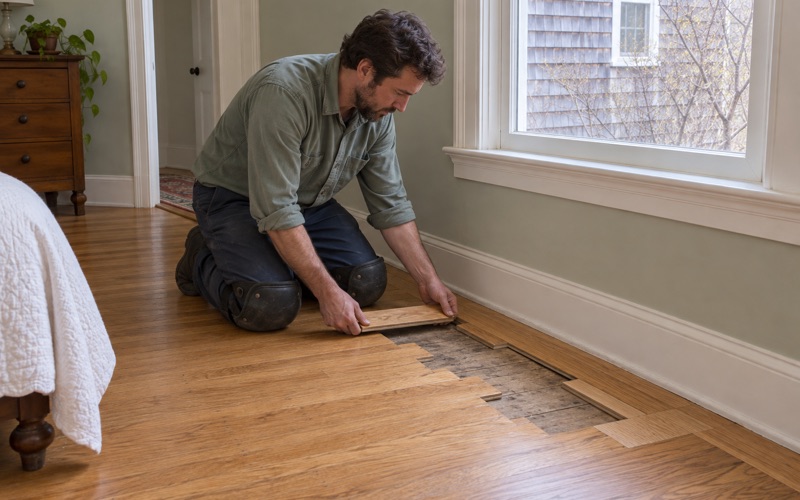
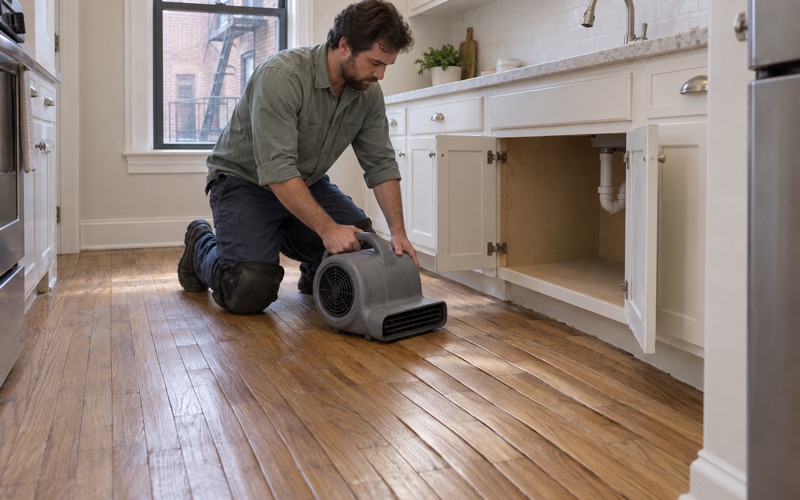
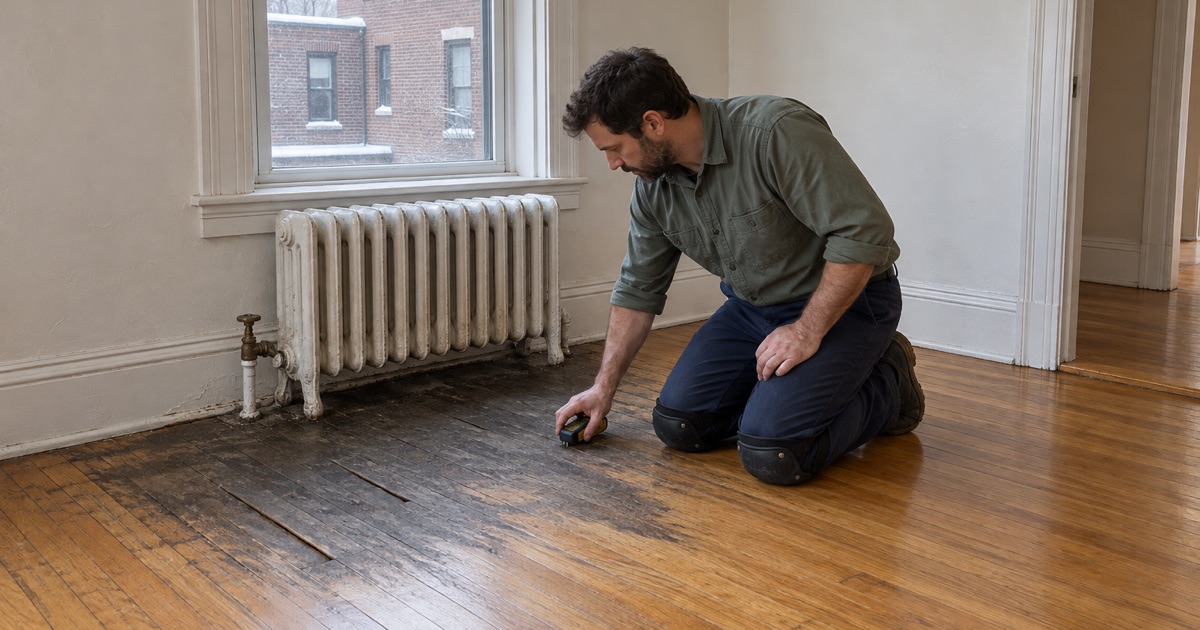
A steam radiator that spits or leaks at its valve soaks the boards underneath for years before anyone notices the black ring or the soft spot around its feet. We find the source first, dry the floor and read the wood with a moisture meter before deciding what to replace. Often only a handful of boards need a weave-in repair, and the rest of the floor can be sanded to match.
Winter Gaps Between Floor Boards
Massachusetts rental housing must be heated from September 15 through May 31, and that long stretch of dry radiator heat shrinks solid hardwood and opens winter gaps that close again by summer. We tell you which gaps are seasonal and which are permanent, because wood filler packed into a seasonal gap in January gets squeezed out when the boards swell. Permanent gaps in old pine can take slivers of matching wood instead.
Cupped and Buckled Hardwood After a Leak
Cupping, where board edges rise above the centers, and crowning, the reverse, both mean moisture reached the floor unevenly, usually from a leak or a damp basement below. Buckling is the extreme case, where boards lift off the subfloor entirely. We stop the moisture, let the floor dry to a measured target and only then decide whether sanding it flat is enough or boards must come out.
Powderpost Beetle Holes in Old Flooring
Small round exit holes with fine, flour-like powder beneath them point to powderpost beetles, which favor older wood that has sat somewhere damp. Carpenter ants leave coarser debris and prefer wood that is already wet. We identify which one you have, send you to a pest professional when the activity is live, and replace or fill the damaged boards once it has been treated.
Pet Urine Stains and Gray Water Marks
Pet urine soaks deep into the grain and turns oak black, and it rarely sands out because the stain runs deeper than the wood a sanding removes. Gray or white water marks, by contrast, often sit in the finish and come out with sanding. We test a spot before quoting, so you know in advance which boards will clean up and which need board replacement.
Squeaks, Soft Spots and Sloping Floors
Squeaks usually mean boards rubbing on loose nails, or a plank subfloor that has shrunk away from its floor joists, and a soft spot can mean rot underneath. Some slope in a century-old house is settling that stopped long ago. We check from below where we can, refasten or shim, and tell you plainly when the problem is structural and belongs to a carpenter first.
Loose Flooring Cleats and Staples
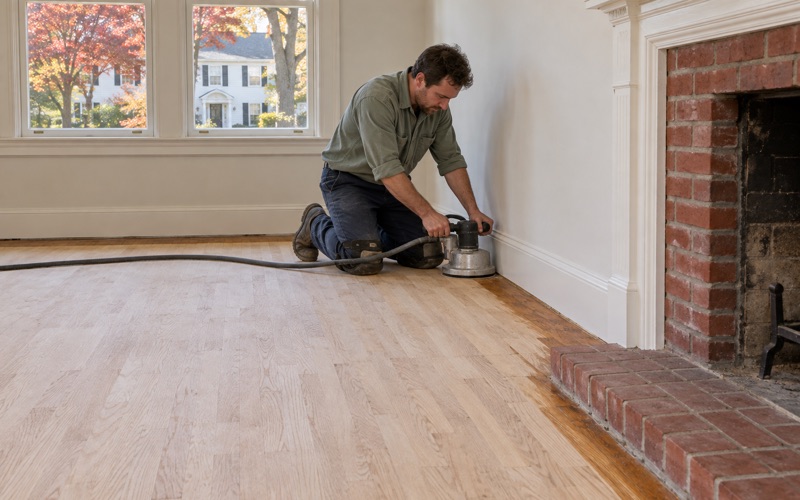
Old floors were fastened with cut nails or flooring cleats, and some later installs used flooring staples that loosen as the wood moves through the seasons. Loose fasteners show up as clicking, lifted board ends and nail heads that tear the sandpaper. We set or replace them before any sanding, because a floor that moves under the sander never finishes flat.
When the unit above swaps carpet for hardwood, footsteps travel straight down through the joists. The fix sits on the upstairs side: area rugs, or an acoustic underlayment under a reinstalled floor, and many condo documents already call for one or both. We work with either owner to find out what the building’s rules say and what a quieter floor assembly would involve.
Finish Worn Through in Hallways and Kitchens
Hallways, the path from the back door and the spot in front of the kitchen sink wear through the finish first, and bare wood there turns gray and drinks in water. If the finish is only thin, a screen and recoat restores it. Once gray wood shows, that area needs sanding at least, and we blend it so the repair does not read as a patch.