
Brookline Wood Flooring handles projects to replace carpet with hardwood in Brookline, MA, serving surrounding cities including Jamaica Plain, Forest Hills, West Roxbury, Watertown and Back Bay. With 20+ years on wood floors, we pull up the carpet, pad and tack strip, refinish the original floor underneath when there is one, and install new hardwood when there is not. In older homes, the first scenario is surprisingly common.
Much of the housing around Brookline was built long before wall-to-wall carpet became popular, and a great deal of it was carpeted later over perfectly good oak. Owners pulling up carpet today often find red oak or white oak strip flooring in good condition, marked only by staples, tack strip nail holes and a few stains. Those floors refinish beautifully for much less than new flooring would cost.
Where the carpet was laid over plywood, or a room was added later without wood, we install new boards and match them to the rest of the house. Either way, the result is one continuous wood floor rather than a patchwork of materials.
Removing Carpet and Uncovering the Floor
Carpet, Pad and Tack Strip Removal
We remove the carpet and pad, pry up the tack strip around the room edges and pull every staple left from the pad. On older floors, tack strip was nailed straight into the hardwood, so we lift it carefully to avoid splintering the board edges. The floor is then swept and inspected before any decisions are made about sanding or new wood.
Carpet removal and disposal are part of the quote. There is no need to pull it up yourself first, and doing so with a flat bar can damage the edges of the boards underneath.
What Is Usually Hiding Under Carpet
In homes built before the 1960s, the most common find is red oak strip flooring, sometimes white oak, maple or pine in older rooms. Borders and inlays around room edges turn up in some older houses. We also find painted borders, where the edge of the floor was painted before the carpet went down, and in homes built before 1978 that paint is treated as possibly containing lead until tested.
Stains, Holes and Damage Under the Carpet
Carpet hides pet stains that soaked through to the wood, water stains near radiators and windows, and patches where a floor register or a wall was moved. Staple and tack strip holes are filled and sanded. Black pet stains and damaged boards are replaced with matching wood before refinishing.
We list those repairs separately in the quote once the carpet is up, because nobody can see them beforehand. If a repair turns out larger than expected, you hear about it and approve it before the work goes ahead.
Refinishing the Floor You Uncover
Sanding the Original Floor
Once the floor is clear, it is sanded to bare wood through a full grit sequence, removing old finish, pad adhesive residue and surface stains. Floors that spent decades under carpet often have little wear, because the carpet protected them. That usually means plenty of wood left for sanding and a result that looks close to new.
We set any raised nails and refasten loose boards before sanding. The work area is sealed for dust containment, with HEPA extraction running on the sanders.
Choosing a Finish
A clear waterborne polyurethane keeps the oak close to its natural color, while an oil-modified finish gives a warmer amber tone. A floor stain can change the color entirely. Every finish we use stays within the Massachusetts limits on VOC content in wood coatings under 310 CMR 7.25. We show samples on the actual floor so you can choose in your own light.
Installing Hardwood Where There Is None
New Hardwood Over a Plywood Subfloor
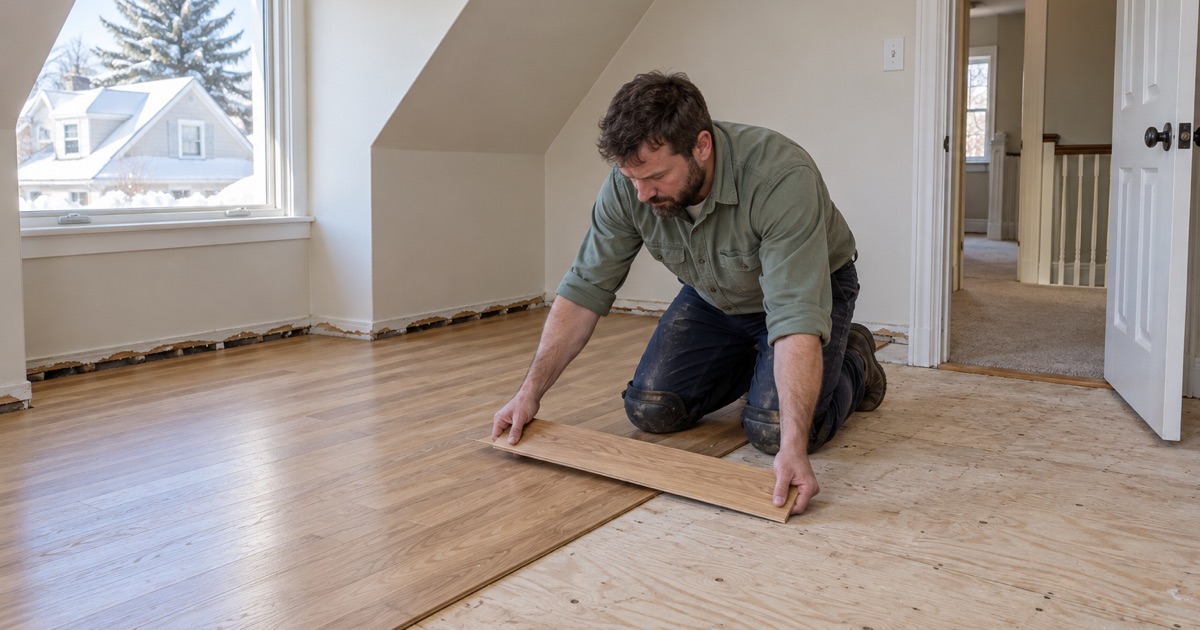
Where carpet was laid over plywood or particleboard, we install new hardwood. Solid oak nailed to a sound plywood subfloor is the usual choice on upper floors. Particleboard does not hold nails well and is often replaced or covered with plywood first. We check the subfloor for squeaks and flatness before installing.
New boards are delivered ahead of time and read with a moisture meter alongside the subfloor, and installation waits until the two agree. Laying hardwood straight from a delivery truck is how a floor opens gaps or cups in its first season.
Matching an Adjoining Oak Floor
When carpet covered only some rooms, the new hardwood has to meet an existing oak floor at a doorway or hallway. We match species, board width and direction, then weave the new boards into the old at staggered points instead of stopping at a straight line. After both are sanded and finished together, the joint disappears.
Condo Units and Sound Rules
In a condo, swapping carpet for hardwood changes what the unit below hears. Many associations, under rules authorized by M.G.L. c.183A, require an acoustic underlayment or set rug-coverage minimums for hard floors. We read your association’s documents before quoting and select an underlayment and installation method that meet them.
Stairs, Trim and Transitions
Carpeted Stairs to Hardwood
Stair carpet usually covers rough treads never meant to be seen, so we install new hardwood treads, risers and nosings or cap the existing ones. Stairs are quoted by the tread and riser, and finished to match the floors they connect.
In older homes, painted stair risers and stringers are handled lead-safe before any sanding or removal. Doing the stairs in the same job as the rooms also means one finishing schedule and one color, instead of two jobs that never quite match.
Baseboards, Thresholds and Heights
Carpet and pad raised the floor height, and baseboards were often set to it. After the carpet comes out, we add shoe molding or quarter round where a gap shows at the baseboard, and fit thresholds or reducers where the wood floor meets tile. Doors may need trimming or re-hanging where a new floor changes the height.
- 20+ Years on Wood Floors
- Free In-Home Estimates
- Dust-Contained Sanding